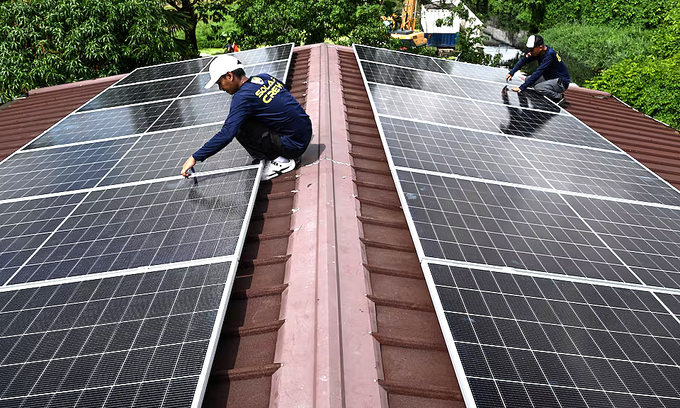
Filipino households are rushing to install rooftop solar systems in response to some of Southeast Asia’s highest electricity prices, propelling the Philippines to the top of global spending on solar panels since conflict in the Middle East began earlier this year. Power distributor Manila Electric Co., or Meralco, has raised tariffs by about 10% since late February, squeezing consumers already grappling with elevated living costs and a weakening currency that makes imported fuel more expensive.
With few power subsidies on offer, residential customers in the country now spend about 12% of a median household’s monthly income on electricity, based on usage of 200 kilowatt-hours — roughly the average for a three-person home. That makes Philippine residential power the costliest in Southeast Asia. Only Singapore comes close on headline prices, but Singaporeans’ average purchasing power is almost 13 times higher, according to comparisons cited in the trade data and market analysis.
The financial strain is convincing more middle-class families to turn to rooftop solar. Adrian Sabatera, a 39-year-old software engineer in Manila, said he had long considered going solar but balked at the expense. As panel costs declined and grid power kept getting pricier, the calculation shifted. He recently installed a 570,000 peso ($9,300) system on the house he shares with three others and now expects many of his peers to follow. “I wouldn’t be shocked if a third of the middle-class population eventually finds their way to this setup,” Sabatera said.
That kind of consumer demand is showing up in trade flows. The Philippines imported $407 million worth of solar panels in the three months through May, a 145% jump from a year earlier, according to Chinese customs data. China, which dominates global panel manufacturing, remains the country’s primary supplier. Even as overall Chinese solar exports slipped 13% in May after Beijing removed a tax rebate, shipments to the Philippines bucked the trend and climbed by almost a third, underscoring the strength of local demand.
On paper, European hub the Netherlands still appears to be a larger market for Chinese panels, but industry experts note that much of that volume passes through as transshipments to other destinations. By contrast, the Philippines’ surge reflects direct end-user demand as households seek to shield themselves from volatile fossil fuel costs and grid tariffs. With payback times shortening as electricity prices rise, rooftop solar is rapidly moving from aspirational purchase to a mainstream financial hedge for the country’s middle class.